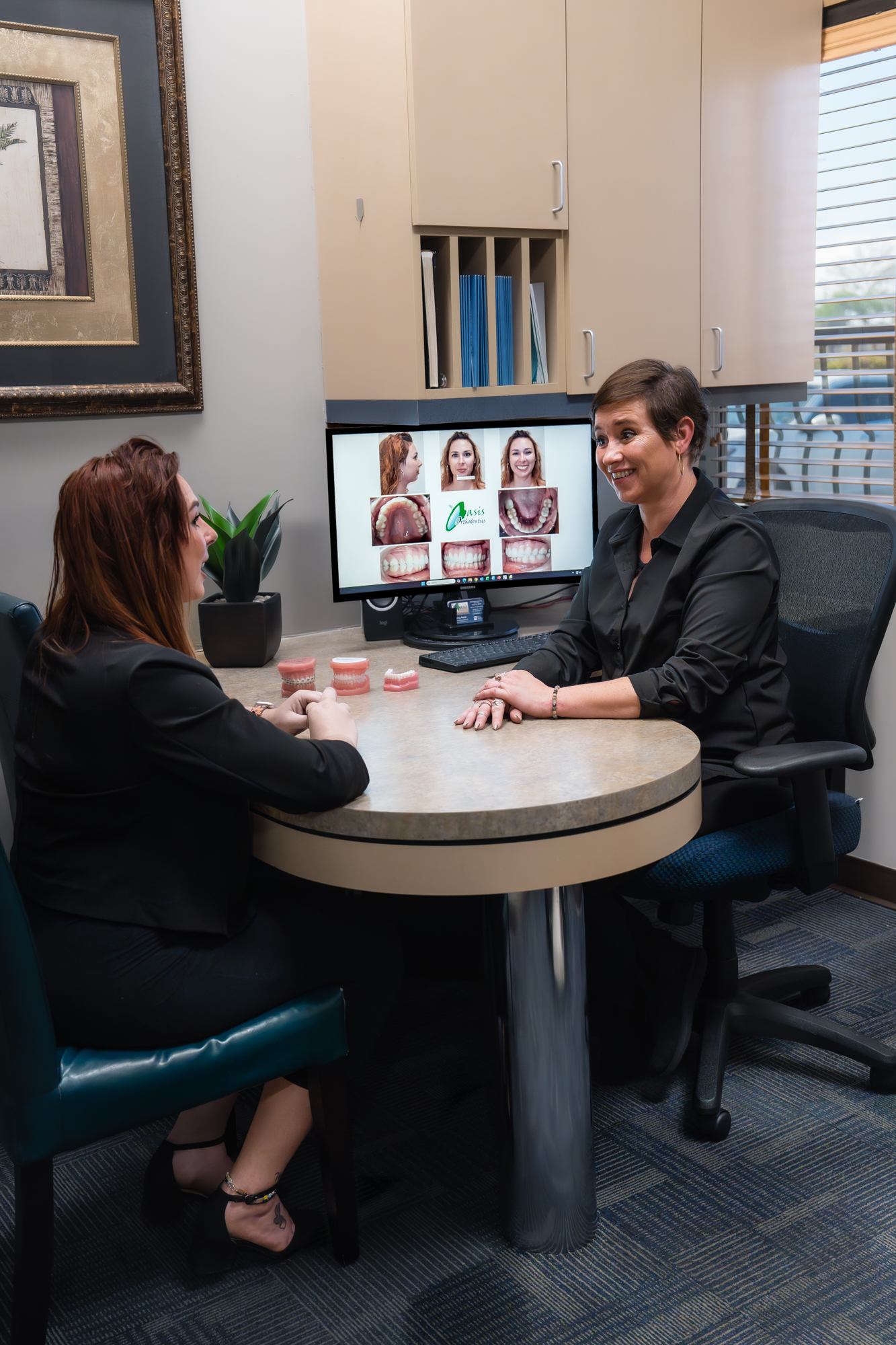
Choosing how to straighten your teeth is a big decision, and it shouldn’t feel overwhelming. At Oasis Orthodontics in Gilbert, we help you weigh three solid paths to a confident smile so you can pick the one that fits your life, your goals, and your daily routine.
Below, you’ll find a straightforward comparison of metal braces, ceramic braces, and Angel Aligners, including how they work, what to expect day-to-day, and who they’re best suited for. Each has real strengths, and the right pick depends on the specifics of your bite and daily routine.

What Are Your Three Main Orthodontic Options?
Metal braces, ceramic braces, and Angel Aligners all move teeth into healthier, straighter positions, but they do it in different ways and with very different looks. Here’s the quick breakdown:
- Metal braces: Stainless steel brackets and archwires bonded to your teeth for full control of even the most complex cases.
- Ceramic (clear) braces: Tooth-colored brackets that blend in with your smile while working just like metal braces.
- Angel Aligners: Clear, removable trays featuring integrated elastic technology for discreet, comfortable correction.
Each option can deliver a great result. The real difference lies in visibility, comfort, and how each fits into your daily routine.
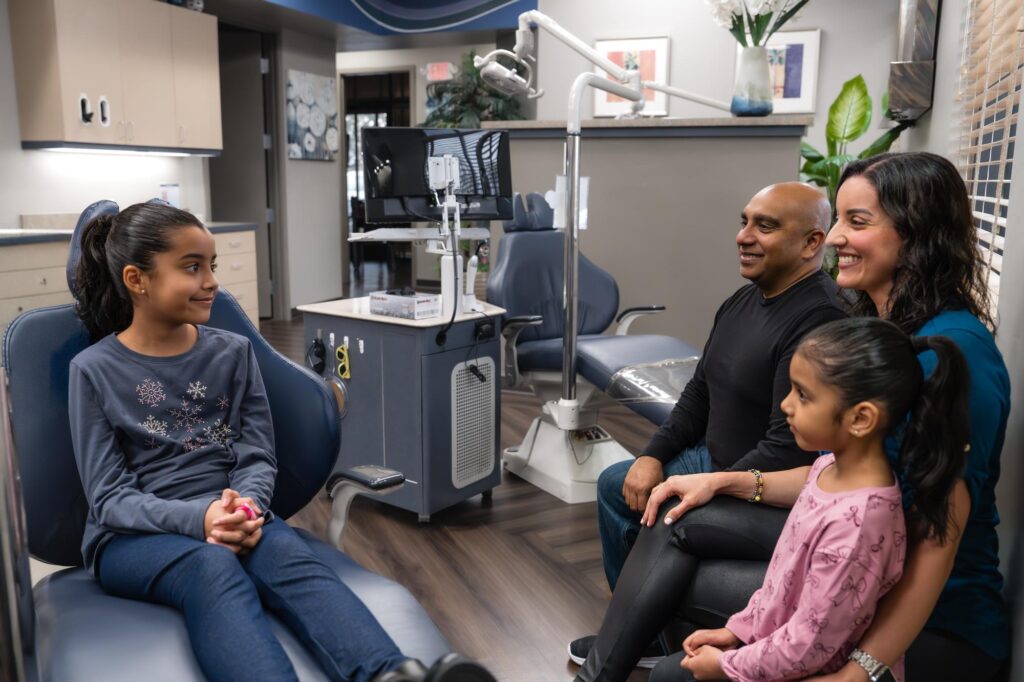
At Oasis Orthodontics, we offer all three so your treatment matches your case, not the other way around. Dr. Day and our team walk you through the pros and trade-offs during your free consult, so you leave with a clear plan and confident next steps. Our goal is to give you the smile you deserve and to have a fun time along the way.
How Each Treatment Moves Your Teeth
All three treatments start the same way at Oasis Orthodontics: with an iTero scan that captures a detailed 3D model of your bite and a customized treatment plan built around it. From there, the mechanics vary.
Metal braces apply steady, continuous pressure through archwires that our team adjusts every 4 to 8 weeks. Small changes at each visit guide your teeth into their ideal positions.
Ceramic braces work the same way as metal braces. The brackets are just made of a tooth-colored material, so they’re far less noticeable in photos and conversations.
Angel Aligners use a series of custom-made clear trays. You wear each tray 20 to 22 hours per day and switch to the next set every 1 to 2 weeks. The built-in elastic component adds gentle, targeted force to help move teeth predictably.
A few key differences to keep in mind:
- Braces work around the clock without any effort on your part.
- Aligners can be checked digitally between visits, while braces need in-office wire adjustments.
- Total treatment length usually falls between 6 and 24 months, depending on how much movement your smile needs.
Dr. Day personally reviews every treatment plan to make sure the mechanics match your goals, and our team keeps you informed at every step so there are no surprises along the way.
Benefits and Trade-Offs of Each Option
Every treatment has real strengths and considerations worth knowing. Here’s an honest look at each so you can compare them side by side before your free consult.
What Are the Pros and Cons of Metal Braces?
- Handles complex bite corrections, rotations, and severe crowding
- No compliance required — they work 24/7
- Very durable and reliable
- Visible on the teeth
- Requires avoiding sticky, chewy, and hard foods
- Brushing and flossing take a bit more effort
Metal braces remain the workhorse of orthodontics because they deliver consistent, predictable results across almost every kind of case, from simple spacing to complicated bite issues.
Why Choose Ceramic Braces?
- Subtle, tooth-colored appearance
- Same proven mechanics as metal braces
- Great for adults who want fixed treatment without the metal look
- Same food and cleaning considerations as metal braces
- Ceramic brackets can be more delicate, so careful handling matters
Ceramic braces are a favorite for adults in client-facing roles who want the reliability of fixed treatment without drawing attention to the brackets themselves.
How Do Angel Aligners Compare?
- Nearly invisible in everyday life
- Removable for meals, brushing, and flossing
- No food restrictions at all
- Integrated elastic technology can reduce emergency visits compared to some other aligner brands
- Comfortable, smooth trays with less cheek irritation
- Requires 20 to 22 hours of daily wear to stay on track
- Best suited for mild-to-moderate cases
The bottom line? Braces do the work for you around the clock, while aligners give you flexibility in exchange for consistent wear. Ceramic braces sit right in the middle for patients who want fixed treatment with a lower-key look.
Side-by-Side Comparison: Metal vs Clear vs Angel Aligners
Sometimes seeing the options laid out makes the choice easier. Here’s a quick reference table:
| Feature | Metal Braces | Ceramic Braces | Angel Aligners |
|---|---|---|---|
| Visibility | Highly visible | Subtle, tooth-colored | Nearly invisible |
| Comfort | May cause temporary cheek irritation | Similar to metal | Smoothest option |
| Case Complexity | Handles severe cases best | Handles most cases | Mild-to-moderate cases |
| Maintenance | Requires floss threaders or special tools | Same as metal, plus careful cleaning | Easiest, brush and floss normally |
| Compliance | Fixed, no effort required | Fixed, no effort required | Requires 20–22 hours daily wear |
| Food Restrictions | Avoid sticky and hard foods | Avoid sticky and hard foods | No restrictions |
| Best For | Teens, complex bites | Adults wanting fixed but discreet treatment | Professionals, self-conscious teens, adults |
| Typical Treatment Time | 18–24 months | 18–24 months | 6–18 months |
The right choice often comes down to two questions: How complex is your case, and how much does appearance matter in your daily life? Our team helps you answer both during your free consult, and we’ll walk through the trade-offs in plain language.
Which Option Is Right for You?
Ultimately, the best treatment is the one that matches your bite, your lifestyle, and how you feel about wearing something on or over your teeth every day. Here’s a guide to help you think it through:
- Choose metal braces if you have severe crowding, significant rotations, or complex bite issues.
- Choose ceramic braces if you want fixed treatment (no trays to remember) but prefer a discreet look, especially as an adult in a professional setting.
- Choose Angel Aligners if you have mild-to-moderate crowding, spacing, or bite concerns and want a nearly invisible option that lets you eat whatever you want.
Lifestyle plays a big role, too. Athletes, wind instrument musicians, and professionals often lean toward aligners for comfort and appearance. Teens sometimes do better with braces if remembering to wear trays 20+ hours a day feels like a stretch.
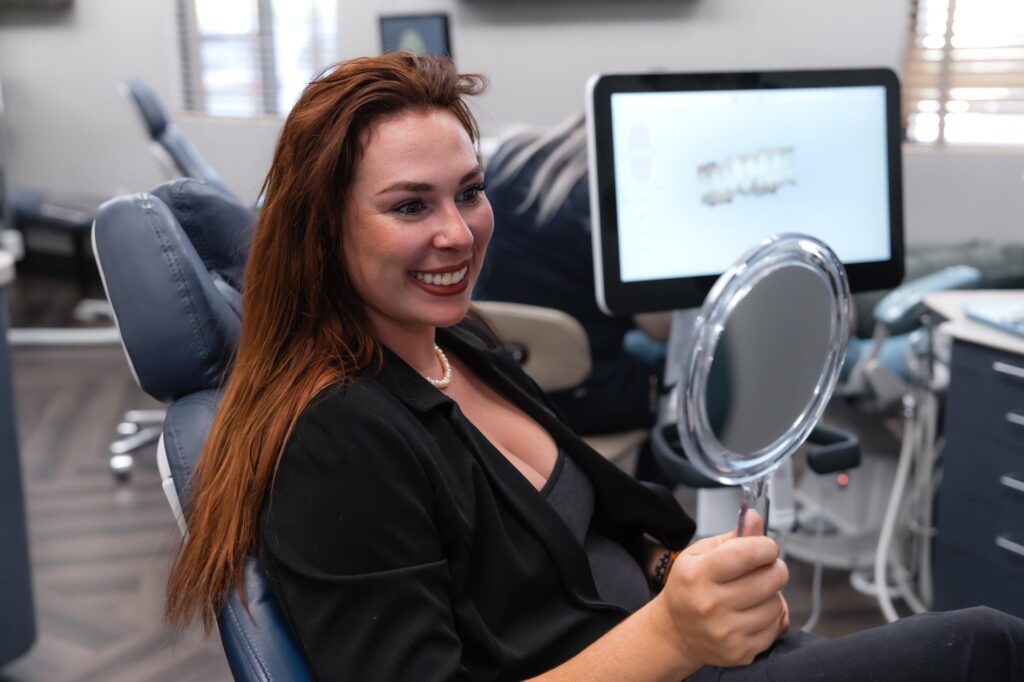
At Oasis Orthodontics, your free consult includes an iTero scan and a personalized recommendation from Dr. Day. You’ll leave knowing which option fits your smile best and why, along with a clear picture of timing and what to expect at each visit. A beautiful smile can change your world, and the right treatment plan is the first step toward it. Ready to see which option is right for you? Book your free consult with Oasis Orthodontics in Gilbert today.
Frequently Asked Questions
Which is better, Angel Aligner or aligner therapy from other brands?
Both are clear tray systems designed to straighten teeth discreetly. Angel Aligners include integrated elastic technology and advanced tray materials that can improve control and reduce the need for extra attachments in certain cases. The right pick depends on your bite and treatment goals, which we’ll review together at your free consult.
Which is better, metal braces or clear aligners?
Neither is universally “better.” Metal braces excel at handling complex tooth movements and don’t require any daily compliance. Clear aligner therapy offers a nearly invisible look and easier eating and cleaning, but the trays need to be worn 20 to 22 hours per day to work. Your case complexity and lifestyle should drive the choice.
How long does each treatment take?
Metal and ceramic braces typically take 18 to 24 months. Angel Aligners usually run 6 to 18 months, depending on how much movement is needed. Simple cases can finish faster with any option, while complex cases may take longer.
Are ceramic braces as effective as metal braces?
Yes. Ceramic braces use the same mechanics and archwires as metal braces, so they can achieve the same outcomes. The main difference is aesthetic, since the brackets blend in with your natural tooth color.
Do all three options require retainers?
Yes. Retention is essential no matter which treatment you choose. Teeth naturally want to shift over time, and wearing your retainer as prescribed keeps your new smile stable for the long haul.
Does insurance cover Angel Aligners?
Most orthodontic insurance benefits apply to any treatment type, including Angel Aligners, metal braces, and ceramic braces. Coverage details vary by plan, so our team will review your benefits with you before you commit to a treatment path.